Stainless steel
316 Stainless Steel CNC Machining
Upload your CAD file for a custom CNC machining quote in Stainless Steel 316, with parts shipped across the USA and Canada.
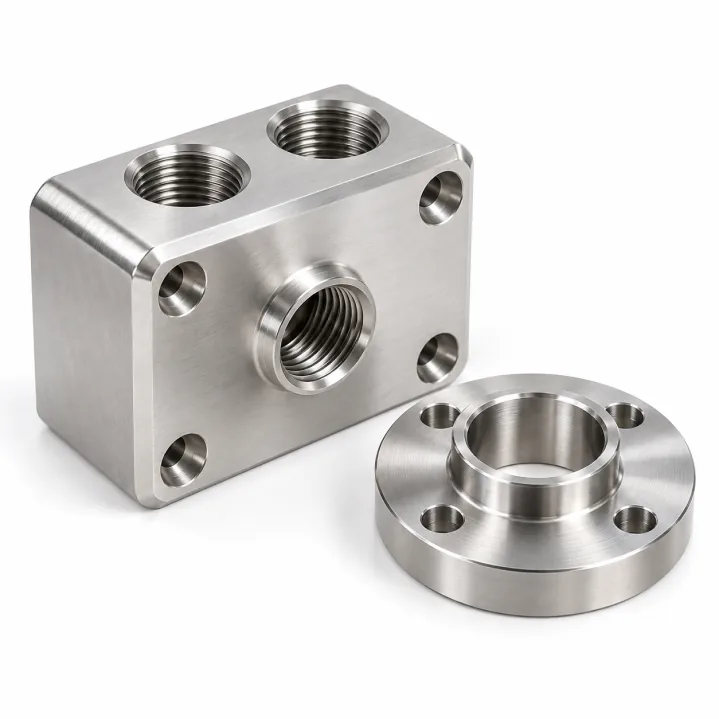
What is Stainless Steel 316?
Stainless Steel 316 is the go-to marine-grade stainless. Adding molybdenum to the austenitic chromium-nickel base gives it far better resistance to chlorides, salt spray and many chemicals than 304, while keeping similar strength. The low-carbon 316L version is preferred for heavily welded parts.
It welds very well and keeps its strength at elevated temperatures, which is why it is common in boat fittings, laboratory hardware, chemical handling and food equipment exposed to cleaning agents. Like 304 it work hardens, so sharp tools and rigid set-ups help keep tolerances tight and finishes clean.
We CNC mill and turn 316 and 316L from bar and plate for one-off prototypes or repeat batches. Note that even 316 can pit in warm sea water, so tell us about the service conditions.
3DMITECH machines Stainless Steel 316 parts for engineers and product teams in the United States and Canada, from a single prototype to repeat production. Upload a STEP file for an instant quote, and add a 2D drawing for critical tolerances, threads or finish notes.
Stainless Steel 316 properties
Mechanical properties
- Ultimate tensile strength
- 620 MPa (90 ksi)
- Yield strength
- 310 MPa (45 ksi)
- Modulus of elasticity
- 205 GPa (29.7 Msi)
- Elongation at break
- 30–50%
Physical properties
- Density
- 8.0 g/cm³ (0.289 lb/in³)
- Hardness
- 83 HRB
- Corrosion resistance
- Excellent (chloride environments)
- Magnetism
- Non-magnetic
- UK / EU equivalent
- 1.4401 / 316S31 (EN58H); 316L = 1.4404
Thermal properties
- Maximum service temperature
- 925°C (1,697°F)
- Thermal expansion coefficient
- 15.9 × 10⁻⁶ /K
- Thermal conductivity
- 17 W/(m·K)
Electrical properties
- Electrical resistivity
- 81 μΩ·cm
Finishing and post-processing
- Weldability
- Excellent
- Machinability
- Good
Common applications
- Marine & boat fittings
- Food & laboratory equipment
- Chemical containers
- Heat exchangers
Figures shown are typical published values for Stainless Steel 316 and can vary with stock form and condition. Confirm any critical property before production.
Stainless Steel 316 CNC machining FAQs
316 (1.4401) machines reasonably well but, like 304, it work hardens and is slower to cut than mild steel. Good tooling and steady cutting give a clean finish.
Our standard CNC tolerance is ±0.1 mm (±0.004 in), with tighter tolerances down to ±0.02 mm (±0.0008 in) available on request. What can be held on Stainless Steel 316 depends on part size, geometry and features, so call out critical dimensions on a 2D drawing and we will confirm them in your quote.
316 is often supplied as machined, bead blasted or polished, and passivation can be specified. It has excellent weldability.
Common applications include marine and boat fittings, food and laboratory equipment, chemical containers and heat exchangers.
316 resists chlorides and many chemicals better than 304 because of its molybdenum content, so it is preferred for marine and chemical use. For dry indoor parts, 304 is usually enough. Warm sea water can still cause pitting in 316.
Typical lead time for Stainless Steel 316 parts is 10 business days from order approval. Quantity, finishing and any heat treatment can extend this, and your quote confirms the date before you order.
Still have questions? We’re here to help.
Contact usRelated materials
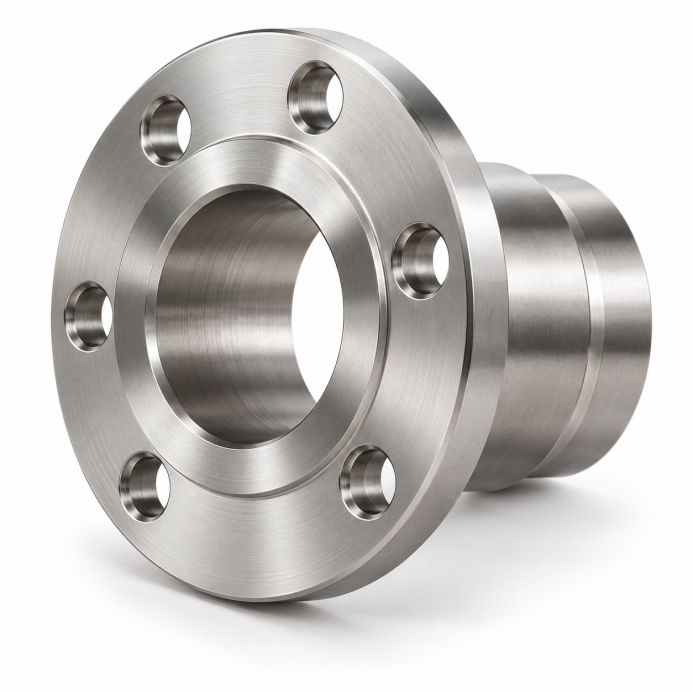
Stainless Steel 304
View material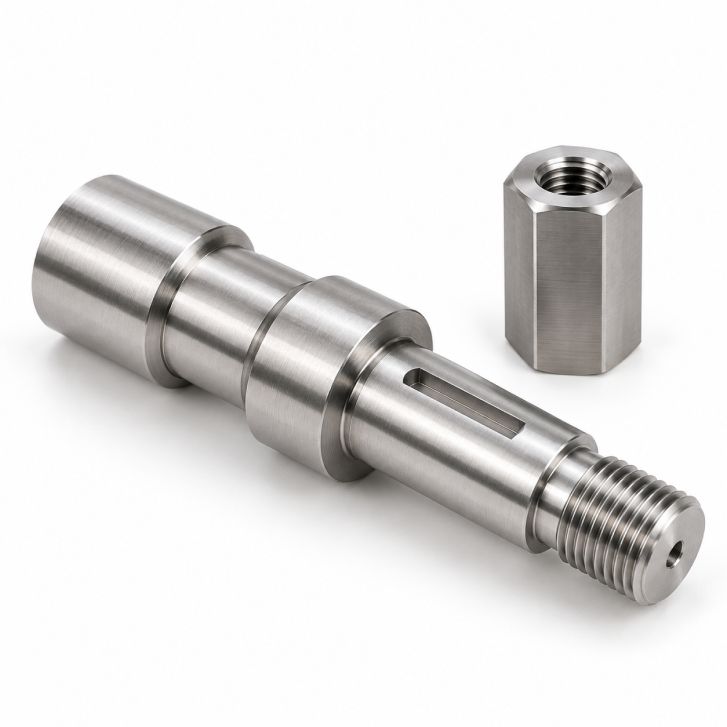
Stainless Steel 303
View material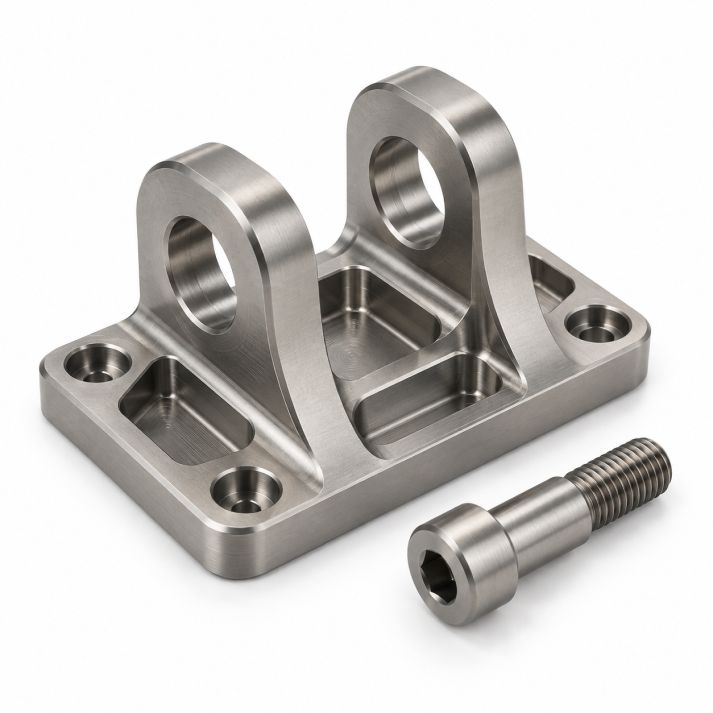
Titanium Grade 5 (TC4)
View material
Aluminum 5052
View material

Get Your CNC Machined Parts Into Production Runs Today
Parts in as fast as 10 business days.